


MEMORIES
The people who worked with Codemasters back in the day have kindly shared their memories with us.
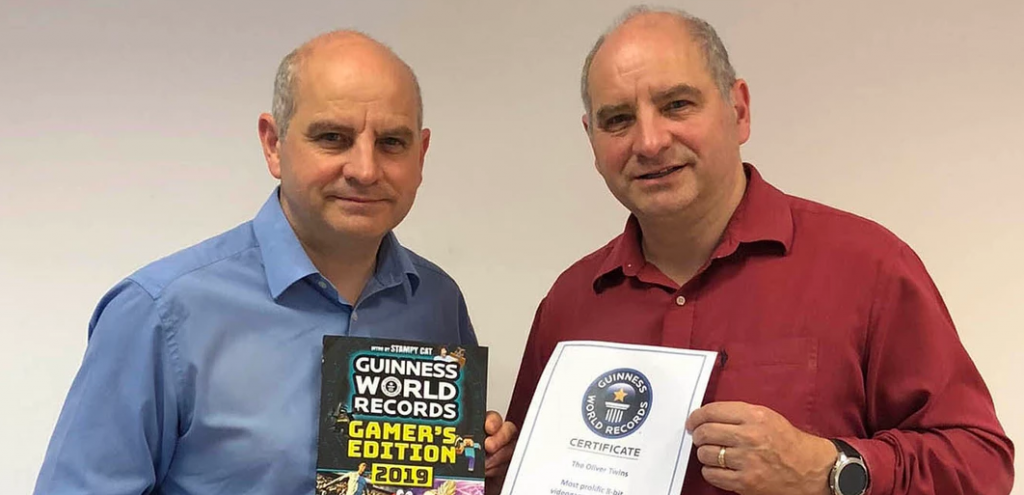
Names: Philip and Andrew Oliver
(The Oliver Twins)
Position: Programmers
We first learnt of Codemasters when we visited the ECTS show in Hammersmith, London in September ’86.
We’d just finished Sixth Form in Trowbridge and had agreed with our parents that we could take a year out before going to University to make computer games.
We already had a number of games published but none had made any decent money and our parents had said we didn’t need to go to University if we could make more than our dad, in this year.
So we’d taken a paper design of a new game to the show and copies of our previously published games.
All the big publishers were there, Activision, Acclaim, Electric Dreams, and others.
We went around a few stands before we came across a tiny stand labelled Codemasters.
We’d not heard of them before, there were 2 brothers, our age, and their father, Jim, manning the stand.
They told us they’d been writing games for Mastertronics under contract but had decided to go it alone.
David had written Red Max and Richard had written BMX simulator, both for Commodore 64, and they were looking for more budget style games to add to the range.
We got chatting to David and showed him cassette boxes of our previous games and the new game design for Super Robin Hood.
He was very interested and we asked how much they’d pay for a game like this on Amstrad.
David said £10,000 which was ten times what we expected.
We said we’d do this as fast as possible get it back to them.
Travelling home we set ourselves the goal of getting it back to them in a month before they changed their minds and set ourselves a gruelling schedule.
A month later we drove to Banbury where they had a small unit on a light industrial estate.
It had 4 parking spaces out front and reception area with 3 rooms behind it.
Their sister, Abigail and 2 school friends, James and Stu were working with them.
We showed the brothers Super Robin Hood.
They liked it and produced a 2 page contract which offered royalties of 10p per copy sold.
We were disappointed, but they reassured us that they expected high sales and offered to write us a cheque for £2,000 as an advance.
Whilst it wasn’t all we hoped, we accepted and signed the contract.
They had the game in the shops within a couple of weeks and reviews started to appear.
It reviewed brilliantly and it went to number 1 in the Amstrad charts.
Richard arranged for the game to be converted to Spectrum and Commodore 64 and this resulted in loads more sales and royalties.
Over the next 6 years years we produced over 60 games for them across Amstrad, Spectrum, NES, Master System, Game Gear and Mega Drive whilst they arranged for most of the games to be converted to all the popular formats.
They quickly out grew the unit in Banbury and bought a farmhouse with outbuildings in Southam near Leamington Spa.
Here they converted broken down barns into offices for more developers and staff.
We worked hard, very hard, but we were so proud of the games we made, and Codemasters did a great job of publishing and marketing them through the ’80s.
We really enjoyed working with them and went on several Skiing holidays with them.
We all went Jet Skiing, Go-Karting, Rallying and Water Skiing off a boat we jointly bought.
They were genius young entrepreneurs, guided by their father, and attracted many like-minded game developers to come and join them in a young and very creative atmosphere.

Name: Allister Brimble
Position: Musician
In 1990 Team 7, a group of Swedish coders created some demo’s for 17 Bit Software, a public domain, non profit making company who’s software was always sold for the price of the disk…£2.50.
Andreas Tadick, Peter Tuleby, Rico Holmes & myself provided Code, Graphics & Sound.
The same team, spurred on by feedback from their 17 bit efforts decided to create a game.
Miami Chase.
It was a good attempt, even if fairly rough around the edges, but they were looking for a publisher.
I had some contact with Codemasters software, composing the music for Italia 1990 so presented the game to them.
Whilst they loved much of it, and wanted to publish it, first of all Tim Miller the producer wanted to have it redesigned.
Many new features were added, and the game was released!
Later on 17 Bit Software decided to create their own game company called Team 17, and the same team created titles such as Alien Breed, Super Frog, & Project X, all masterminded by the now legendary Martyn Brown.
Very shortly after the release of Miami Chase, Codemasters contacted me about creating music & sound for the relatively new NES format.
They invited me up to Leamingston Spa for a meeting.. the first time I had seen a games development company in person!
After meeting David & Richard Darling I was asked to sit in front of a PC to see how I would get on composing the music for an NES.
I was greeted with a text editor!!!
After a lot of explanation from coder & musician, Gavin Raeburn, it turned out I had to type every note, note duration, arpeggio & instrument into the text editor for it to work!
This was certainly in at the deep end!!
Eventually, I got the hang of it and went on to produce the music for Boomerang Kid, Pro Soccer Simulator, Dizzy, Bignose Freaks out, Pro Bassball Simulator & Linus Spacehead.
In my later career I would use these skills to produce music for many Gameboy Color titles, which shared the same sound chip as the NES!
An interesting fact.. Codemasters wanted to manufacture their own game cartridges.. something against Nintendo’s rules.
To do this they reverse engineered the NES console and won a court battle in order to produce their own games.
In order to be able to make music on the NES, I was provided with an NES console which was still inside the box but with a reset button sticking out of the top!
I was told, under no circumstances am I allowed to open the box!..
Otherwise I might see how they had wired it up!
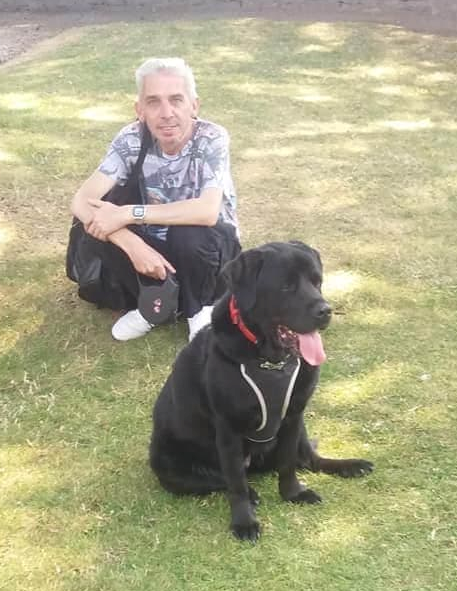
Name: Paul Griffiths
Position: Programmer
Interceptor told me they had the Spike In Transylvania contract (C64) so I started work on the conversion as although I was working in the building I was freelance.
When I got about 50% of the way through of it, I was told they had lost the contract they just didn’t tell me.
When they told me this I contacted Codemasters (Tim Miller I believe) and I just carried on working on it until it was done.
I kept this quiet of course from the owners of Interceptor.
Steg was a great game (for Big Red Software also CodeMasters affiliated) however after Alternative Software ripped me off for 4k, it got delayed as I needed to survive.
Everyone had a great time in those days we did it for fun mainly (well I did).
Dizzy Down The Rapids was commissioned based on my work with Spike and I obviously ended up in Leamington Spa full time for a few years after there.

Name: Mark Neesam
Position: Art and Design
I was never actually employed by Codemasters.
When I did work that was credited to them I was usually actually working for Big Red Software.
We worked on many of their games.
So the work I did on Micro Machines 2 and Turbo Tournament and a few other projects was all done as an employee of Big Red (and even then the Micro Machines work would have been sub-contracted to Supersonic Software, I’d imagine).
I was responsible for a lot of the level artwork for those games, but as an employee of Big Red, liaising with Supersonic.
I never really dealt with Codies at this point.
I did odds and sods on the side that made their way into Codies games (CJ’s Elephant Antics, a SNES conversion of Archer MacLean’s Dropzone, the PC version of Micro Machines.
My main bit of work for Codies would have been Ernie Els Golf for the Game Gear, which again was done whilst employed by Big Red, but probably directly for Codies.
For this I did pretty much everything art and design-wise (I learnt how to make golf courses, which was surprisingly useful)
The closest I got to working directly for Codies was for a bit of work I did for Micro Machines V3, for which I was paid freelance.


