


The History of Codemasters


the early years of codies
Codemasters’ first game was “BMX Simulator”, a successor to “BMX Racers”.
According to David Darling, the company aimed at making budget-priced games with the quality of full-priced games, as they would gain a larger customer base that would subsequently create better exposure.
To produce more games in less time, Codemasters started hiring developers on a freelance basis.
Products developed using this strategy include:
— “G-Man” and “Danger Zone” by Mike Clark
— “Terra Cognita” by Stephen Curtis
— “Super Robin Hood”, “Ghost Hunters” and “Dizzy” by the Oliver Twins
— “Super Stuntman” by Peter Williamson
— “Lazer Force” and Poltergeist” by Gavin Raeburn
— “ATV Simulator” by Tim Miller.
By April 1987, Codemasters started seeking programmers that would create platform conversions of Codemasters’ games in exchange for four-digit sums, via placements in Popular Computing Weekly.
Initially, it concentrated on what were known as “budget” games at the £1.99 then £2.99 price point for 8-bit home computers such as the ZX Spectrum and Commodore 64.
With titles such as “BMX Simulator”, “Rock Star Ate My Hamster” and “Pro Skateboard Simulator”.
Codemasters developed a reputation for innovation with features such as simultaneous four player gaming.
They also had major success with the Dizzy series of games developed by the Oliver Twins (who later went on to found Blitz Games Studios).
Within the first year of trading, Codemasters was the best selling game publisher in Britain with in excess of 27% of the total market according to the Gallup charts.


the logos over the years
the beginning
While attending school in Vancouver, David Darling and his younger brother Richard had learned programming with punch cards and had access to the school’s computer room outside of hours through one of the school’s janitors.
Additionally, on weekends, they were allowed to use the Commodore PET computer owned by their father, Jim Darling to create a text version of Dungeons & Dragons.
Later on, the two brothers and school friend Michael Heibert, whose family possessed a VIC-20 computer, founded Darbert Computers and created video game clones of popular games, such as Galaxian and Defender.
The Darling brothers later returned to England, where they acquired their own VIC-20 and founded Galactic Software, again with the help of Heibert.
An advertisement placed in the magazine Popular Computing Weekly caught the attention of Mastertronic, a British software publisher, and the two brothers quit their education to pursue development of budget-priced games for the company.
These games included Space Walk, BMX Racers, Jungle Story, Orbitron, Sub Hunt and Pigs in Space.
They also developed The Games Creator (later re-released as “Creations”), a game-making tool that would later be sold commercially.
The Darling brothers found success in making these games, gaining £200,000 by the time they were 16 and 17 respectively.
In 1985, the two owned a 50% stake in Mastertronic, which they proceeded to sell in March 1986 when they decided to become independent.
By October 1986, the Darling brothers, with help from their father Jim, had founded Codemasters.
They initially worked out of the Beaumont Business Centre in Banbury, where their elder sister Abigail managed the front desk.
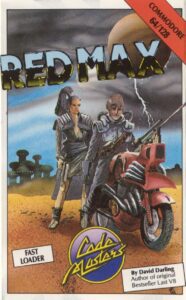

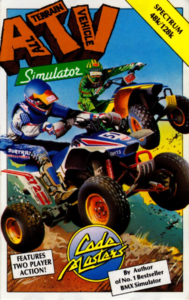

the 1990’s
As the 8-bit computer market diminished, Codemasters turned to develop for the 8-bit and 16-bit console markets, as well as moving away from their budget title legacy to more full-price games on the 16-bit computers — 1992 saw the last title in the Dizzy series, “Crystal Kingdom Dizzy”, released at full-price rather than budget price.
They had major success with the Micro Machines series and Pete Sampras Tennis on the Sega Mega Drive.
Both franchises featured the J-Cart, allowing two extra controllers to be attached to the game cart without requiring Electronic Arts’ 4 way play or SEGA’s four-player adaptor.
Codemasters is notable for making the large majority of games published by Camerica, which bypassed Nintendo’s lock-out chip by glitching it and produced unlicensed NES games.
These NES games were known for being shiny gold and silver cartridges.
Many Codemasters titles were also featured on Camerica’s Aladdin Deck Enhancer.
In 1990, Codemasters developed a device called the Game Genie, which came out of the lockout bypass work to play unlicensed games.
It was a cheat cartridge for the NES, released in the US by Galoob and in Canada and the UK by Camerica.
In the case Galoob v. Nintendo, Game Genie was determined not to violate Nintendo’s copyright under fair use.
In May 1999, Codemasters acquired British games developer, Sensible Software for an undisclosed sum.
Sensible’s co-founder, Jon Hare has maintained a close working relationship with Codemasters by designing many of its games, including a variety of updates of both “Sensible Soccer” and “Cannon Fodder”.
In an effort to establish themselves in the United States, they announced that they would launch a new development studio in Oakhurst, using offices that were abandoned by Sierra On-Line and hiring much of Yosemite Entertainment’s laid off staff in mid-September 1999.
Codemasters soon evolved as a game developer to produce full price games across all current platforms, sold globally.
Notable successes included the “Colin McRae Rally” series and “Operation Flashpoint”.


